
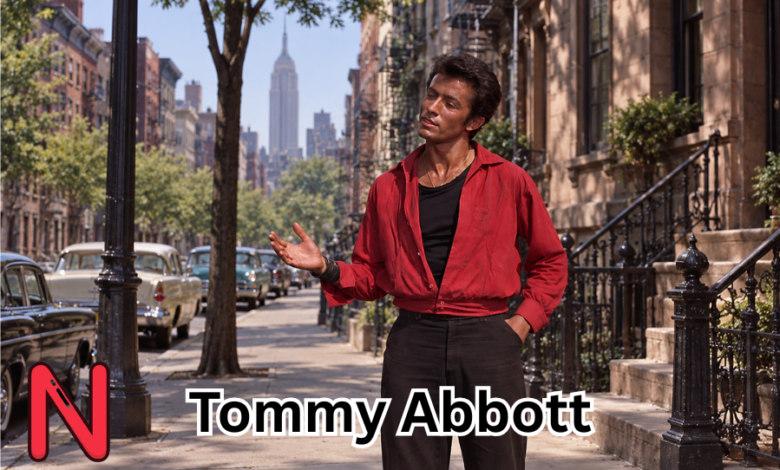
Tommy Abbott remains a fascinating figure in American musical theatre history, remembered not only for appearing in one of Broadway’s most celebrated productions but also for the creative work he contributed behind the scenes. Best known for playing Gee-Tar in the original Broadway production and the 1961 film adaptation of West Side Story, Abbott built a career that extended far beyond acting.
His professional journey connected him with some of the most influential theatre artists of the twentieth century, particularly director and choreographer Jerome Robbins. Through years of collaboration, Abbott became an important part of the process that transferred stage choreography to new audiences around the world. His work demonstrates how performers can influence theatre history not only through the roles they play but also through the creative support they provide behind major productions.
Quick Bio
| Detail | Information |
|---|---|
| Full Name | Tommy Abbott |
| Born | 4 November 1934 |
| Birthplace | Waco, Texas, United States |
| Died | 8 April 1987 |
| Age at Death | 52 |
| Nationality | American |
| Profession | Actor, dancer and choreographer |
| Training | School of American Ballet |
| Best Known For | Playing Gee-Tar in West Side Story |
| Notable Productions | West Side Story, Fiddler on the Roof |
| Key Collaborator | Jerome Robbins |
| Notable Film Work | Chief choreographer for Fiddler on the Roof (1971) |
The Early Foundations Behind Tommy Abbott’s Theatre Career
Born on 4 November 1934 in Waco, Texas, Tommy Abbott developed his skills during a period when American musical theatre was undergoing major artistic changes. Dance was becoming an increasingly important storytelling tool, with choreographers using movement not simply as entertainment but as a way to reveal character, conflict and emotion.
Abbott trained at the School of American Ballet, an institution closely associated with the development of American ballet and classical dance training. This background gave him a strong technical foundation and introduced him to the discipline required for professional performance.
His training prepared him for a career that combined different aspects of theatre. Abbott was not limited to being a dancer or performer; he gradually became involved in choreography, staging and production development. These abilities would later make him a valuable collaborator for some of Broadway’s leading creative figures.
The Breakthrough Role in West Side Story
The production that brought Tommy Abbott his widest recognition was West Side Story. The musical premiered on Broadway in 1957, with music by Leonard Bernstein, lyrics by Stephen Sondheim, book by Arthur Laurents and choreography and direction by Jerome Robbins.
Abbott played Gee-Tar, a member of the Jets gang. Although the role was not one of the central characters, the Jets were essential to the production’s exploration of rivalry, identity and social tension in New York City.
The movement created by Robbins became one of the defining elements of West Side Story. Instead of using traditional musical theatre dance as a separate performance element, Robbins integrated choreography directly into the dramatic structure. The physical style of the gangs helped communicate their relationships, aggression and loyalty.
For Abbott, being part of the original Broadway company placed him inside a production that would become one of the most influential musicals in theatre history.
In 1961, the stage musical was adapted into a feature film directed by Robert Wise and Jerome Robbins. Abbott returned to play Gee-Tar in the film version, allowing him to become part of a landmark screen adaptation that introduced West Side Story to international audiences.
Working Closely With Jerome Robbins
While Abbott gained attention as a performer, one of the most important parts of his career came through his long professional relationship with Jerome Robbins.
Robbins was recognised as one of the most influential figures in twentieth-century American theatre and dance. His work crossed Broadway, ballet and film, and he was known for demanding precision and emotional depth from performers.
Abbott became one of Robbins’ trusted assistants and collaborators. This role required more than technical dance ability. A choreographic assistant needed to understand Robbins’ artistic intentions, help maintain staging details and support the transfer of productions between different venues and companies.
Abbott travelled internationally with Robbins’ Ballets U.S.A., helping bring American dance to audiences beyond Broadway. The experience expanded his understanding of large-scale production work and exposed him to different performance environments.
His collaboration with Robbins became a defining feature of his professional identity. Rather than remaining known only as a performer from West Side Story, Abbott developed a reputation as someone capable of protecting and presenting complex choreography.
From Performer to Creative Leader on Fiddler on the Roof
One of Tommy Abbott’s most significant professional achievements came through his connection with Fiddler on the Roof.
The original Broadway production opened in 1964 and featured choreography by Jerome Robbins. The musical became one of the most successful productions of its era, combining music, storytelling and movement to portray tradition, family and social change.
Abbott worked as Robbins’ assistant on the production and also appeared in a small role as Vladimir. His involvement gave him a deeper understanding of the choreography and staging methods behind the show.
When Fiddler on the Roof was adapted into a film in 1971, Abbott took on the responsibility of chief choreographer. His task was to translate Robbins’ stage choreography for cinema while maintaining the original artistic spirit.
Moving choreography from stage to screen is a complex process. Film allows closer camera angles, editing and different visual perspectives, but it can also change how movement is experienced. Abbott’s work involved adapting the production for a new medium while respecting the foundation created by Robbins.
The film received significant recognition and remains one of the most widely known musical adaptations of its period.
Preserving Broadway History Through Revivals
Tommy Abbott continued contributing to theatre by helping preserve Robbins’ original staging of Fiddler on the Roof during later Broadway revivals.
The 1976 and 1981 Broadway revivals required careful recreation of choreography and production details. Maintaining the identity of an established musical involves more than copying movements; it requires understanding the purpose behind the staging.
Abbott’s previous experience working directly with Robbins made him well suited for this responsibility. His role helped ensure that audiences could continue experiencing the production in a form connected to its original creative vision.
This type of work is often less visible than performing in a leading role, but it plays an important part in theatre history. Many classic productions survive because artists dedicate their careers to preserving artistic standards across generations.
The Importance of Choreographers Behind the Scenes
Tommy Abbott’s career highlights an important part of entertainment history: the contribution of creative professionals who operate between performance and production.
Audiences often remember actors, singers and leading performers, but theatre depends on many people who shape the final experience. Choreographers, assistants, movement specialists and rehearsal leaders influence how stories are communicated on stage and screen.
Abbott’s career represents this combination of performance and creative development. His experience as a dancer helped him understand physical storytelling, while his years assisting Robbins allowed him to contribute to some of Broadway’s most important productions.
His work also reflects the changing nature of musical theatre during the mid-twentieth century, when choreography became increasingly central to dramatic storytelling.
Tommy Abbott’s Lasting Place in Theatre History
Tommy Abbott died on 8 April 1987 in New York City at the age of 52. Although his career was shorter than some other major theatre figures of his generation, his professional contributions reached several landmark productions.
His connection to West Side Story remains the most recognisable part of his public legacy, but his broader career shows a much wider creative contribution. He was a performer, a collaborator and a guardian of important theatrical traditions.
The productions associated with Abbott continue to be performed, studied and discussed decades after their original releases. His work demonstrates how artists can leave a lasting impact through both visible performances and behind-the-scenes creative responsibilities.
Conclusion
Tommy Abbott’s career shows that theatre history is shaped by more than the names appearing in leading roles. His journey from dancer and performer to trusted creative collaborator reflects the importance of skill, discipline and artistic partnership.
Through West Side Story, Fiddler on the Roof and his work with Jerome Robbins, Abbott became part of a remarkable era in American musical theatre. His contribution continues through the productions and choreography traditions he helped preserve for future audiences.
FAQs.
Who was Tommy Abbott?
Tommy Abbott was an American actor, dancer and choreographer best known for playing Gee-Tar in the original 1957 Broadway production of West Side Story and the 1961 film adaptation. He also worked extensively with choreographer Jerome Robbins.
What role did Tommy Abbott play in West Side Story?
Tommy Abbott played Gee-Tar, a member of the Jets gang. He appeared in both the original Broadway production of West Side Story and the 1961 film version.
Was Tommy Abbott involved with Fiddler on the Roof?
Yes. Abbott worked as Jerome Robbins’ assistant on the original Broadway production of Fiddler on the Roof. He later became the chief choreographer for the 1971 film adaptation and helped with later Broadway revivals.
What was Tommy Abbott’s connection to Jerome Robbins?
Tommy Abbott worked closely with Jerome Robbins for many years as an assistant choreographer and collaborator. He helped preserve and present Robbins’ choreography in major productions.
Where was Tommy Abbott born?
Tommy Abbott was born in Waco, Texas, on 4 November 1934.
READ THIS TOO: David Abeles: The Executive Steering TaylorMade Through Golf’s New Era





One Comment