
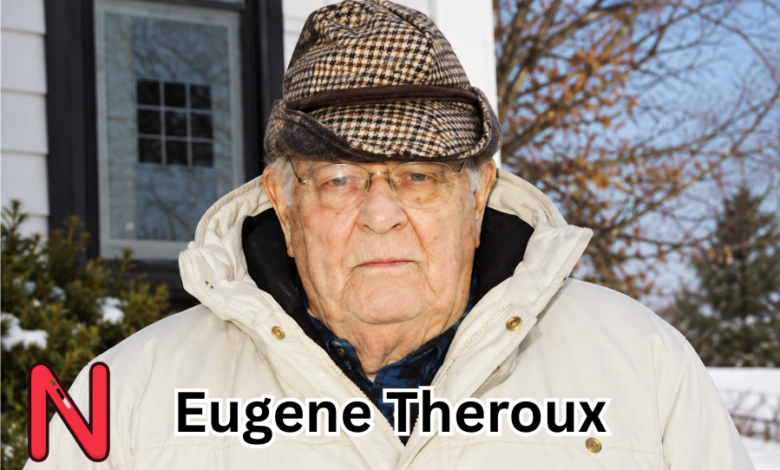
Eugene Theroux is often searched because of his connection to actor and screenwriter Justin Theroux, but his own career tells a different story. Long before the Theroux name became familiar through Hollywood, television and bestselling books, Eugene “Gene” Theroux had built a specialist legal practice around international trade, sovereign disputes and cross-border business.
His work became particularly significant as American companies explored commercial relationships with China in the 1970s. Over subsequent decades, Theroux worked with Baker & McKenzie, helped develop the firm’s presence in emerging markets and handled matters involving foreign governments. His record is therefore more substantial than the label “Justin Theroux’s father” suggests.
Quick Bio
| Detail | Information |
|---|---|
| Full Name | Eugene “Gene” Theroux |
| Born | 1938 |
| Nationality | American |
| Profession | International lawyer and attorney |
| Known For | Private international law, international trade and cross-border legal work |
| Major Law Firm | Baker & McKenzie, now known as Baker McKenzie |
| Key International Work | China, the Soviet Union/Russia and other emerging international markets |
| China Connection | Helped develop Baker & McKenzie’s presence in China and worked with the organisation now known as the US-China Business Council |
| Education | Studied at Pratt Institute before earning a law degree from Georgetown University |
| Notable Legal Work | Represented foreign governments in significant US federal litigation, including matters involving China and the Soviet Union |
| Spouse | Phyllis Grissim Theroux, author and essayist |
| Son | Justin Theroux, actor, writer and producer |
| Brother | Paul Theroux, novelist and travel writer |
| Nephews | Louis Theroux and Marcel Theroux |
| Net Worth | No reliably verified public net-worth figure is available |
| Current Status | Retired international lawyer |
From art school to international law
Theroux’s route into law was not entirely conventional. Born in Massachusetts in 1938, he first pursued art, studying at Pratt Institute, before turning to legal education. He later earned a law degree from Georgetown University and entered practice in Washington, D.C., where international work quickly became the part of the profession that held his attention.
He joined Baker & McKenzie early in his career. The firm was already building the global model that would become central to its identity, giving Theroux a natural platform for cross-border work. His early matters involved international commerce and disputes spanning several jurisdictions rather than purely domestic corporate law.
China became the defining thread in Eugene Theroux’s career
The most important chapter of Theroux’s career developed around China. In 1972, while still a young Baker & McKenzie lawyer, he travelled to the country with a US congressional delegation examining the commercial environment. The visit came when sustained American business engagement with the People’s Republic of China was only beginning to take shape.
Theroux then became closely involved with the National Council for US-China Trade, later renamed the US-China Business Council. Historical records identify him first as a consultant and then as its first vice president, helping develop programmes and policies during the organisation’s formative period.
That placed him near the centre of an emerging commercial relationship, as companies tried to understand how trade, contracts and disputes could work between systems with little recent commercial experience of one another.
Theroux spent decades travelling between the United States and China with clients and business delegations. His expertise therefore developed alongside the expansion of US-China trade, rather than after the market had already become established.
Building a legal presence in a changing market
Theroux’s China work extended beyond individual transactions. He was involved in establishing Baker & McKenzie offices in Beijing and Shanghai, helping create a permanent platform for international legal services in a market that had previously been difficult for foreign firms to enter.
Baker McKenzie now traces its China presence back more than five decades. Its Beijing office was established under Representative Office Licence No. 001 for an international law firm.
Theroux also lectured on commercial law in China. By the end of the 1970s, he was teaching Chinese business professionals under the auspices of the country’s foreign-trade authorities. That work placed him inside a period when modern cross-border commercial practice between Chinese and Western institutions was still developing.
His connection with the US-China Business Council continued beyond its earliest years. By the early 1990s, he was listed as a Baker & McKenzie partner on the organisation’s board, showing that China remained a major part of his practice.
The railway-bond case showed the scale of his legal work
One of the clearest examples of Theroux’s work came from litigation involving old Chinese government bonds. In 1979, holders of Hukuang Railway bonds issued by the Imperial Chinese Government in 1911 brought a class action against the People’s Republic of China in federal court in Alabama.
The case initially produced a default judgment of more than $41 million against China. The Chinese government later appeared in the proceedings and retained Eugene Theroux of Baker & McKenzie as counsel.
The dispute centred on sovereign immunity and whether the US Foreign Sovereign Immunities Act could be applied retrospectively to obligations created long before the statute existed. The default judgment was ultimately set aside, and a federal appellate court concluded that the law did not provide jurisdiction over the historical bond claims in those circumstances.
The case placed Theroux where international law, sovereign status, historical debt and US federal jurisdiction intersected. Decades later, renewed interest in old Chinese bonds still brought his role in the earlier proceedings back into view.
Beyond China: Soviet and Russian matters
China was the strongest recurring theme in Theroux’s career, but not the only one. He also represented the Soviet Union and later Russia in US federal courts. A 1988 federal appellate case concerning debt instruments issued by the Imperial Russian Government lists Theroux as counsel for the Soviet government.
He was also involved in Baker & McKenzie’s international expansion, helping start the firm’s Moscow office and later working on questions surrounding legal services in India.
That geographic spread helps define his speciality. Theroux worked in markets with unsettled regulatory structures, requiring an ability to navigate different legal systems and commercial cultures.
Why Justin Theroux drives renewed interest in his father
For a broader audience, Eugene Theroux is most immediately connected with Justin Theroux. Eugene is the father of the actor, writer and producer known for The Leftovers, Mulholland Drive and screenwriting work on films including Tropic Thunder and Iron Man 2. Justin was born in Washington, D.C., in 1971 to Eugene Theroux and writer Phyllis Grissim Theroux.
The wider Theroux family also includes several prominent writers and media figures. Eugene’s brother Paul Theroux became internationally known as a novelist and travel writer, while another brother, Alexander Theroux, built a career as a novelist, poet and essayist. Paul’s sons include documentary filmmaker Louis Theroux and writer and broadcaster Marcel Theroux.
That family context can overshadow Eugene’s professional record. His work largely unfolded through law firms, trade organisations, court proceedings and international business institutions, so his public profile remained comparatively low.
Is Eugene Theroux still practising law?
Theroux is best described today as a retired international lawyer rather than a current Baker McKenzie practitioner. In the later stages of his career he was identified as senior counsel, while subsequent reporting described him as retired.
Older professional directories can still associate his name with Baker & McKenzie or list historic bar admissions, but that does not establish current practice. His importance is primarily historical: he belonged to a generation of American lawyers working in China and other emerging markets before international legal practice became as institutionalised as it is today.
What is Eugene Theroux’s net worth?
There is no reliable, publicly verified figure for Eugene Theroux’s net worth. Precise online estimates attached to lawyers or relatives of celebrities are often based on assumptions rather than disclosed financial records.
His long career with a major international law firm indicates substantial professional experience, but his assets, investments, partnership income and liabilities are not publicly documented well enough to support a credible calculation.
Conclusion
Eugene Theroux occupies an unusual place in the Theroux family story. Public curiosity may begin with Justin Theroux or the family’s better-known writers and broadcasters, but Eugene’s own record belongs to a different arena: the development of modern international legal practice.
His career intersected with the early growth of US-China commerce, major sovereign litigation and the international expansion of one of the world’s largest law firms. Seen in that context, Eugene Theroux is more than a relative of famous creative figures; his professional history offers a window into how lawyers helped businesses and governments operate across legal systems when many of today’s global commercial relationships were still being built
FAQs
Who is Eugene Theroux?
Eugene “Gene” Theroux is an American lawyer known for a long career in private international law and cross-border business. He worked with Baker & McKenzie and became particularly associated with early US-China commercial relations, international litigation and the firm’s expansion into major overseas markets.
Is Eugene Theroux Justin Theroux’s father?
Yes. Eugene Theroux is the father of actor, writer and producer Justin Theroux. Justin was born in Washington, D.C., in 1971. His mother is author and essayist Phyllis Grissim Theroux. Eugene’s professional career was in international law rather than entertainment.
What did Eugene Theroux do in China?
Theroux travelled to China in 1972 and later became the first vice president of the organisation now known as the US-China Business Council. He advised on cross-border business, helped establish Baker & McKenzie offices in Beijing and Shanghai, lectured on commercial law and represented China in significant US litigation.
Did Eugene Theroux work for Baker McKenzie?
Yes. Theroux spent much of his legal career with Baker & McKenzie, now branded Baker McKenzie. He progressed through senior roles at the firm, with work spanning trade, sovereign matters, international business and legal issues involving China, Russia and other jurisdictions.
Is Eugene Theroux related to Paul and Louis Theroux?
Yes. Paul Theroux, the novelist and travel writer, is Eugene Theroux’s brother. Louis Theroux, the documentary filmmaker and broadcaster, is Paul’s son and therefore Eugene’s nephew. Writer and broadcaster Marcel Theroux is also his nephew.
READ THIS TOO: Jack Whigham: The Hollywood Executive Behind Range Media Partners and a New Family Film Chapter



One Comment