
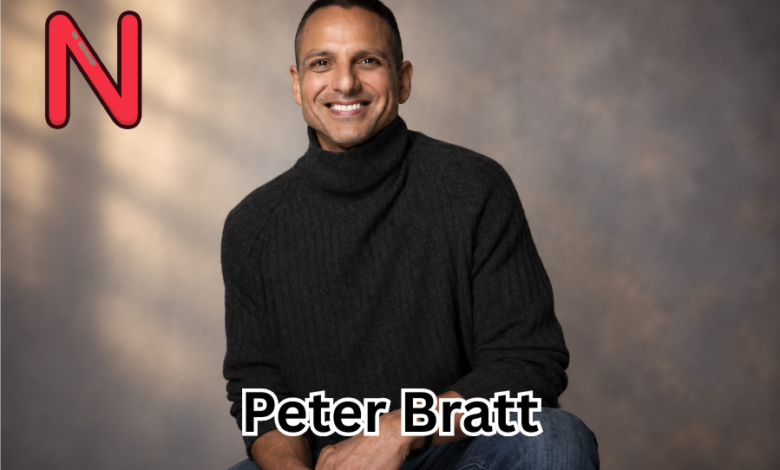
Peter Bratt has spent much of his filmmaking career asking whose stories reach the screen and whose remain overlooked. The San Francisco-born writer, director and producer made his name with independent dramas about race, family and belonging before directing Dolores, a documentary that restored attention to a crucial figure in American labour history. His work also brings him into frequent collaboration with his younger brother, actor Benjamin Bratt.
Yet his story now extends beyond film. As a leader of The Village SF, a project developing culturally grounded services and housing for urban Indigenous communities, he is working on the same questions of identity and representation in a different setting. That combination of cinema and practical organising makes his career especially revealing: storytelling is one way to change how a community is seen, but not the only one.
Quick Bio
| Detail | Information |
|---|---|
| Full Name | Peter Bratt |
| Date of Birth | 14 November 1962 |
| Age | 63 years (as of October 2026) |
| Birthplace | San Francisco, California, USA |
| Nationality | American |
| Profession | Film Director, Screenwriter, Producer |
| Ethnic Background | Indigenous Peruvian (Quechua) heritage |
| Education | University of California, Santa Cruz |
| Qualification | Degree in Politics (1986) |
| Famous Brother | Benjamin Bratt (American Actor) |
| Notable Films | Follow Me Home, La Mission, Dolores |
| Directorial Debut | Follow Me Home (1996) |
| Major Recognition | Peabody Award for Dolores, Norman Lear Writer’s Award |
| Community Work | Project Lead, The Village SF |
| Known For | Independent Cinema, Cultural Storytelling, Indigenous Advocacy |
| Net Worth | No reliably verified public figure available |
A San Francisco Childhood Shaped by Activism
Bratt grew up in the Mission District, an area whose Latino culture, neighbourhood ties and political history would later become central to his filmmaking. He and his siblings were raised by their mother, an Indigenous woman from Peru of Quechua heritage who was active in social justice movements. Her influence went beyond political conversation at home.
As children, the family participated in the American Indian occupation of Alcatraz, which began in 1969. They also encountered the Wounded Knee protest, Native fishing-rights campaigns and farmworker organising, learning early about power and solidarity.
His characters face prejudice but are also shaped by music, relationships and their ideas of home. The communities in his films are not merely backdrops for conflict; they have histories and internal lives.
From Politics Graduate to Independent Director
Film was not Bratt’s original plan when he entered the University of California, Santa Cruz. He graduated in 1986 with a degree in politics, having developed an interest in how popular culture influences perceptions of race and society.
A university film course proved particularly important. Political and feminist film criticism taught him to question how images shape audiences’ assumptions. Professor Vivian Sobchack encouraged his filmmaking ambitions and helped him take the next step towards graduate film study at New York University.
He subsequently favoured character-driven stories that explored cultural belonging and injustice without becoming lectures.
Follow Me Home: An Unconventional First Feature
His debut feature, Follow Me Home, premiered in competition at the Sundance Film Festival in 1996. The road drama follows a group of men travelling across the United States with the provocative intention of painting a mural on the White House. Their encounters expose tensions involving racism, identity and relationships within the group itself.
The cast included Benjamin Bratt, Jesse Borrego, Steve Reevis, Calvin Levels and Alfre Woodard. The journey brings African American, Chicano and Native American perspectives into dialogue.
It won the audience award for best feature at the San Francisco International Film Festival. The award recognised an independent debut that used drama to foreground perspectives often sidelined in commercial cinema.
La Mission: A Neighbourhood Drama with Difficult Questions
More than a decade later, Bratt returned to the Mission District for La Mission, which premiered at Sundance in 2009 and reached US cinemas in 2010. He wrote and directed the drama, with Benjamin playing Che Rivera, a former convict and recovering alcoholic raising his teenage son, Jes, played by Jeremy Ray Valdez.
Che takes pride in his neighbourhood, his lowrider cars and a hard-won reputation for toughness. His sense of himself is challenged when he learns that his son is gay. The conflict examines how love can be constrained by fear, homophobia and inherited ideas about masculinity.
Community pride coexists with expectations that hurt people. Rather than making Che a simple villain, the film examines whether he can redefine strength.
The Creative Partnership with Benjamin Bratt
Their partnership extends beyond family ties. Peter wrote and directed La Mission, while Benjamin starred and shared producing responsibilities. They had previously worked on Follow Me Home.
Unlike his actor brother, Peter chiefly works behind the camera. Their shared upbringing adds local knowledge to La Mission, although the film is not autobiographical.
At the 2010 Imagen Awards, La Mission won best feature film, Benjamin won best actor, and Peter received the Norman Lear Writer’s Award. The recognition reflected both their separate contributions and what they accomplished together.
Dolores: Placing a Labour Organiser at the Centre
With Dolores, released in 2017, Bratt moved from fictional storytelling into feature documentary. The subject was Dolores Huerta, a labour organiser and civil rights campaigner who worked alongside César Chávez to build the farmworkers’ movement. Despite her central role, public accounts of that history had often given Chávez considerably more attention.
Musician Carlos Santana helped initiate the project, and Bratt directed, wrote and produced the film. It traces Huerta’s organising work while exploring her commitments to women’s rights, political participation and economic justice. It also explores the personal costs of activism.
Interviews with Huerta and her children bring a family dimension to a story that could otherwise have become a procession of historical milestones. Archive footage places those experiences within decades of political change.
Dolores premiered at Sundance and subsequently screened through PBS’s Independent Lens. It received a Peabody Award and an Emmy nomination, providing Bratt with recognition beyond the independent drama circuit. The documentary also links directly to his childhood: Huerta’s work belonged to the political world his family had experienced first-hand.
Taking the Conversation to Television
Bratt later directed the 2021 ABC News special Corazón de América – Celebrating Hispanic Culture, part of Soul of a Nation. Benjamin hosted the programme, which addressed different aspects of Latino identity, from language and cultural expression to racism and civil rights.
The programme brought Peter’s interest in cultural representation to a wider news audience.
The Village SF and a Different Kind of Storytelling
Bratt’s current public work also places him in the field of community development. He serves as project lead for The Village SF, an initiative of the Friendship House Association of American Indians. The initiative seeks to build a community hub bringing services and cultural space together.
The plans include housing, healthcare, behavioural health support, workforce opportunities and ceremonial space. It addresses urban Indigenous needs that can be overlooked when Native life is associated mainly with reservations.
In May 2026, local coverage described plans for a six-storey development at 80 Julian Avenue, near Friendship House’s existing recovery services. Construction had been anticipated for the autumn, although the project’s opening has not been confirmed.
Bratt has also advised organisations working in Indigenous health, environmental advocacy and community arts. In August 2025, the San Francisco Foundation appointed him to its board of trustees for a five-year term running to 2030. His work now also helps shape institutions serving those communities.
Recognition Without a Conventional Hollywood Career
Bratt’s professional honours include a Rockefeller Fellowship, the Peabody recognition associated with Dolores and the 2023 Social Sciences Distinguished Alumni Award from UC Santa Cruz. He is also a member of the Directors Guild of America.
Across a relatively small filmography, he returns to power, family, identity and exclusion. His civic commitments extend those concerns beyond cinemas.
Conclusion
Peter Bratt’s contribution is best understood through the relationship between his films and his community work. From the road trip of Follow Me Home to the neighbourhood conflicts of La Mission and the historical recovery undertaken by Dolores, his projects ask who gets heard and what recognition changes.
The Village SF carries that concern into housing, health and cultural space. For Bratt, representation remains connected to real communities.
FAQs
Is Peter Bratt related to Benjamin Bratt?
Yes. Peter is Benjamin Bratt’s older brother. Benjamin is known primarily for acting, while Peter works as a writer, director and producer. They collaborated on Follow Me Home and La Mission, and they worked together again on the television special Corazón de América.
What films has Peter Bratt directed?
His best-known feature films are Follow Me Home (1996), La Mission (2009) and the documentary Dolores (2017). The first two are scripted dramas exploring relationships and cultural identity; Dolores examines the life and organising work of civil rights activist Dolores Huerta.
Where did Peter Bratt study?
He studied politics at the University of California, Santa Cruz, graduating in 1986. Film studies there helped direct his interest towards cinema, and professor Vivian Sobchack encouraged him to pursue filmmaking. His university later recognised his work with a distinguished alumni award in 2023.
What is Peter Bratt doing now?
Alongside his filmmaking background, he serves as project lead for The Village SF, a San Francisco initiative developing Indigenous-focused housing and community services. He also joined the San Francisco Foundation’s board of trustees in 2025. These positions reflect his continued involvement in community organising and cultural advocacy.
Has Peter Bratt won major awards?
Yes. Dolores received a Peabody Award and an Emmy nomination, while La Mission earned him the Norman Lear Writer’s Award. His first feature won an audience award at the San Francisco International Film Festival. His honours also include recognition from UC Santa Cruz for his work beyond filmmaking.
READ THIS TOO: Nicholas Bellisario: His NCIS Connection to Sean Murray and Life Beyond Acting



One Comment