
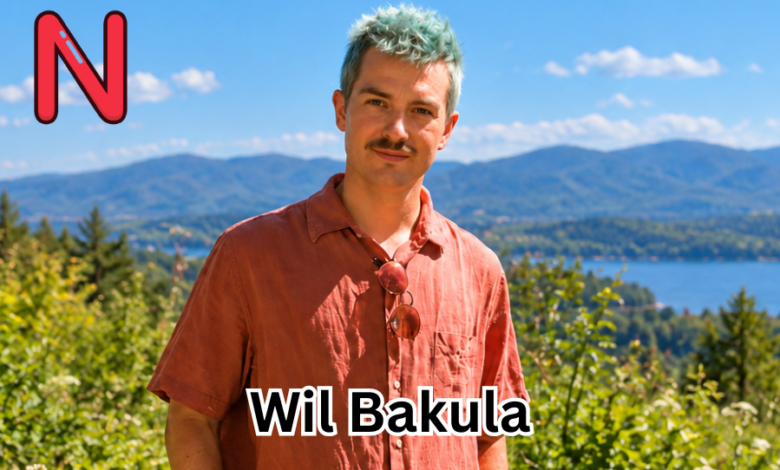
Wil Bakula has spent much of his working life making music rather than appearing on television. As the producer behind Portland-based pop duo Foamboy, he has developed a catalogue that moves between jazz, electronic pop, funk and disco. His latest major release, Stupid Hot, arrived in July 2026, giving listeners a fresh example of his studio work.
His surname is familiar for another reason. Wil is the son of Scott Bakula, the actor associated with Quantum Leap, Star Trek: Enterprise and NCIS: New Orleans, and actress Chelsea Field. Yet the most revealing account of the younger Bakula is found in recording credits, independent music venues and his long-running partnership with singer Katy Ohsiek. Those details tell a career story with its own direction.
Quick Bio
| Details | Information |
|---|---|
| Full Name | Wil Botfield Bakula |
| Popular Name | Wil Bakula |
| Date of Birth | December 1, 1995 |
| Age (2026) | 30 Years Old |
| Birthplace | Los Angeles, California, USA |
| Nationality | American |
| Profession | Musician, Music Producer, Songwriter |
| Famous For | Foamboy, Chromatic Colors, Son of Scott Bakula |
| Father | Scott Bakula |
| Mother | Chelsea Field |
| Siblings | Owen Bakula, Chelsy Bakula, Cody Bakula |
| Education | Willamette University |
| Music Genres | Indie Pop, Synth-Pop, Jazz, Electronic |
| Associated Bands | Foamboy, Chromatic Colors |
| Notable Albums | My Sober Daydream, Eating Me Alive, Stupid Hot |
| Marital Status | Not Publicly Confirmed |
| Net Worth | Not Publicly Verified |
| Known Music Base | Portland, Oregon, USA |
Why His 2026 Album Matters
Foamboy released its third album, Stupid Hot, on 10 July 2026. The eleven-track record gives Bakula a clearly documented role: he co-wrote the music with Ohsiek, produced the album and performed its keyboards, synthesisers, piano and programmed drums. Ohsiek wrote the lyrics and performed the vocals.
That division of labour matters because Bakula is not simply an occasional instrumentalist attached to a band. Other players add electric guitar, bass and clavinet, creating a sound that draws on musicianship as well as electronic production.
The album also marks an artistic shift. Foamboy’s earlier work leaned heavily into jazz-flavoured pop and disco, while Stupid Hot places more emphasis on house-inspired rhythms. Songs such as “Far Away”, “Summering”, “Self Improvement” and “Loud Boy” pair energetic arrangements with subjects including loneliness, personal expectations and environmental anxiety.
The Family Name Behind the Interest
Born Wil Botfield Bakula in Los Angeles on 1 December 1995, he belongs to a family with a substantial history in American entertainment. His father became widely recognised as Sam Beckett in Quantum Leap and later played Captain Jonathan Archer in Star Trek: Enterprise.
Scott and Chelsea have two sons together, Wil and Owen. Wil also has two older half-siblings, Chelsy and Cody, from Scott’s earlier marriage.
Scott has spoken in interviews about valuing family time and maintaining boundaries around his private life. The public record says much more about Wil’s collaborations than it does about his home life, and that distinction is worth preserving.
The Oregon Collective That Came First
Bakula’s development as a musician is closely tied to Oregon, rather than the Los Angeles film industry. He and Ohsiek began collaborating while attending Willamette University in Salem. Their early project, Chromatic Colors, operated as an experimental collective involving different instrumentalists and styles.
This group did not confine itself to a single genre. Jazz, funk, rock, pop and other influences could appear in the same creative setting. That breadth helps explain the mix of live playing and synthetic textures that later became a feature of Foamboy.
A tangible record of this phase is Nature / Nurture, released by Chromatic Colors in May 2019. Its credits name Bakula, Ohsiek and David Guzman for music and lyrics, with Bakula also responsible for mixing. The release establishes that he was already contributing both to composition and to the technical presentation of recorded music. Chromatic Colors’ recordings give the partnership a documented history before Foamboy’s debut.
How Chromatic Colors Became Foamboy
As the larger collective narrowed, Bakula and Ohsiek became the principal partnership. The transition was about more than changing a band name. With fewer collaborators at the core, their compositions developed a clearer shared identity.
In a 2023 interview with Willamette Week, Bakula discussed moving from accepting a wide variety of musical ideas towards editing material more carefully. Knowing what to leave out became as useful as knowing what to record.
Foamboy took shape as a distinct project during the pandemic. At the time, Bakula was in Portland and Ohsiek was studying in Corvallis. They built the debut while working in separate cities.
Creating a Debut Across Two Cities
My Sober Daydream, released in October 2021, introduced Foamboy’s partnership to a wider indie audience. Much of the writing happened through exchanged recordings and emails rather than conventional sessions in one room.
Tracks such as “Better”, “Laundry” and “Peach Smoothie” used the accessible vocabulary of pop without abandoning the duo’s taste for jazzy harmony and electronic detail. Ohsiek’s direct lyrical approach sat alongside Bakula’s carefully layered instrumental backing.
That contrast became a defining quality. A song could sound light, even playful, while addressing relationships, identity or exhaustion.
The debut attracted attention from outlets including KCRW and Consequence of Sound. For a developing duo, however, it brought their recordings beyond the circle of listeners who had followed Chromatic Colors.
Learning to Sound Bigger Without Losing the Duo
Foamboy’s second album, Eating Me Alive, was released in March 2024. Unlike the largely remote debut, it grew out of regular performances with an expanded live band. This meant that arrangements could be influenced by how songs actually worked onstage, not only by studio experiments.
The record draws together disco grooves, dreamlike electronic passages and more distorted psychedelic-pop sounds. Its lyrics address the complications of relationships and self-understanding, while the production moves between danceable sections and quieter moments. Tracks including “Not A Go”, “Exit Sign” and “Song About You” show that range.
Live activity also became an important part of the project’s identity. Foamboy performed around the American West Coast and appeared at events including Pickathon. Coverage from Portland’s music press and airplay on KCRW and KEXP helped establish the duo beyond its original college connections.
It demanded arrangements flexible enough to work with other players while maintaining a consistent musical character. That is a different challenge from assembling a track alone in a studio.
What the New Record Says About His Work
Following Eating Me Alive, Foamboy continued releasing music, including the 2025 single “Phone”, which addressed the draining pull of digital devices. The third album is more rhythmically direct, but its credits reveal a collaborative approach rather than a one-person production. Guitarist Keenan Dorn contributes across the album, while other players supply specific keyboard and bass parts. Mixing and mastering were also handled by separate specialists.
For Bakula, those credits show the balance between creative control and teamwork. He remains responsible for the production and core keyboard textures while making room for musicians who bring different sounds to individual tracks.
The themes of Stupid Hot also push beyond standard relationship songs. Aging, climate concerns and pressure to improve oneself appear alongside personal frustration.
Public Recognition, Privacy and Finances
Bakula’s professional visibility comes chiefly through recorded releases, music journalism and appearances with Foamboy. There is no strong basis for treating him as a television actor simply because both parents work in that industry. Details of his romantic relationships are not sufficiently documented for confident claims. Keeping those matters separate from the work avoids turning a music feature into celebrity speculation.
There is also no reliably established public figure for Wil Bakula’s net worth. Album releases, festival bookings and radio play confirm professional activity, but they do not disclose personal earnings, contractual arrangements or assets. Any precise fortune attributed to him without credible financial evidence should be treated cautiously. What can be assessed is the scope of his recorded output: work with Chromatic Colors, three Foamboy albums and a continuing stream of singles.
Conclusion
Wil Bakula’s family name may initially draw attention, but his recordings explain why he deserves consideration on his own terms. From the open-ended experiments of Chromatic Colors to the focused production of Foamboy, his career shows a steady refinement of style and collaboration. The July 2026 release of Stupid Hot makes that progression current, audible and independently verifiable.
FAQs
Who is Wil Bakula?
Wil Bakula is an American musician, songwriter and producer associated with the Portland pop duo Foamboy. He works alongside vocalist and lyricist Katy Ohsiek and previously collaborated with the experimental group Chromatic Colors. He is also the son of actors Scott Bakula and Chelsea Field.
How old is Wil Bakula in 2026?
Wil Bakula was born on 1 December 1995, making him 30 years old as of October 2026. His Los Angeles birth and family background are documented separately from his music career, which developed through college-era collaboration and the independent music scene in Oregon.
Is Wil Bakula related to Scott Bakula?
Yes. Scott Bakula is his father, and actress Chelsea Field is his mother. Wil and his brother Owen are the couple’s two children together. Scott also has two older children, Chelsy and Cody, from an earlier marriage. Wil has followed a music-focused career rather than his father’s route into screen acting.
What music has Wil Bakula released?
His credits include Chromatic Colors’ Nature / Nurture and Foamboy’s three full-length albums: My Sober Daydream (2021), Eating Me Alive (2024) and Stupid Hot (2026). He has also worked on individual tracks and singles, contributing as a writer, producer, keyboard player and recording collaborator.
What is Wil Bakula’s net worth?
No credible, independently verified net-worth figure is publicly available for Wil Bakula. Although his recordings, festival performances and production credits establish an active music career, they do not reveal his personal finances. Claims assigning him a specific fortune should not be presented as fact without reliable supporting evidence.
READ THIS TOO: Adam Emmerich: The Lawyer Behind Major Deals and the Emmerich Family Story


One Comment